Saturday, November 14, 2015

Tapeworm tales and lessons in public health

This post is for my friends and family who are not veterinarians.

Tapeworm news periodically make the rounds. I remember asking my mother when I was 14 (and suffering from a bout of headaches), "What if I have a tapeworm in my brain like Leander Paes?" A MRI at a big Bangalore hospital revealed that I didn't. But, Paes, a Grand Slam-winning, star doubles-tennis player, who had contracted it in the Unites Sates, did. And it had been all over the news (News story here).

More recently, a 26- year old man living in California's Napa valley, was diagnosed with the condition "neurocysticercosis" (caused by the tapeworm Taenia solium), when he went to the emergency room complaining of a headache. Following his surgery and subsequent recovery, the man told the news channel this : “I just couldn’t believe something like that would happen to me. I didn’t know there was a parasite in my head trying to ruin my life.” (News story here). Whether the parasite was "trying to ruin" his life is a question that no one can answer. It was doing what it was wont to do, after all.The quick and brilliant diagnosis and treatment given to the man by the ER doctors saved the man's life.

Other recent stories have included the case of dwarf human tapeworm adults, Hymenolepis nana, in an immunocompromised human adult,  that had showed malignant transformation (the worm had the tumor, that is). Here is the original research article in the New England Journal of Medicine (link here). And all at once, the  "experts" who are neither veterinarians nor human physicians, have jumped on it, having a field day. The word "immunocompromised" seems to have been left out in news reports, and a whole host of blogposts have been written by these self professed "health writers", who have obviously done a lot of research on that veritable fount of wisdom and knowledge, called Google. The results speak for themselves, and the sole purpose appears to be fear mongering (like this one here).

In popular culture, neurocysticercosis has been featured in an episode of the popular show "House". Even comics and memes feature these dorso-ventrally flattened creatures (Comic here). https://upload.wikimedia.org/wikipedia/commons/e/e2/Taenia_saginata_adult_5260_lores.jpg
"Taenia saginata adult 5260 lores" by http://phil.cdc.gov/PHIL_Images/20031208/87d4bff74e41427cb278526bd9cbe76a/5260_lores.jpg. Licensed under Public Domain via Commons - https://commons.wikimedia.org/wiki/File:Taenia_saginata_adult_5260_lores.jpg#/media/File:Taenia_saginata_adult_5260_lores.jpg
  
As a Veterinarian and as a parasitologist, who does actual research in the field, I recommend a sane, balanced evaluation of  tertiary literature, especially of blogposts and newspaper articles. In other words, don't believe everything written by self proclaimed "health experts", who are only arm-chair philosophers, who got their information from the first ten search results that Google (or worse Bing) brought up. [The letters that come after a person's name, gained after years of structured instruction at an academic institution, actually mean something. And if those letters are not MD, DVM, BVSc or something equivalent, it is best not to take parasitology advice from the people whose names precede the letters. (I assure you that we are not part of a conspiracy to get you)]

So, here are some things that you might be wondering about, which I had taken the liberty of answering, before you have voiced your questions.

*Q: Do humans get tapeworms?
 A: Why, yes! They do. Both the tapeworms mentioned above (Taenia solium and Hymenolepis nana) are human tapeworms.

*Q: Are the two tapeworms mentioned above the only ones that humans get?
A: No, humans can be infected by other tapeworms too. If you ingest dog fleas that have the larval form of the dog tapeworm Dipylidium caninum, you can get infected by the adult of that species. If you eat uncooked fish with the larval stages of Diphylobothrium latum, you can be infected by adults of that species. If you drink water that have Cyclops or live microscopic floatsam that have the larval stages of Spirometra mansonoides , you can become the intermediate host for that tapeworm. If you ingest dog feces accidentally (I hope no one ingests dog feces intentionally), and if there were Taenia or Echinococcocus eggs in that feces, you can become the intermediate host for those tapeworms. There are other tapeworms that humans could potentially get, but notice how the words uncooked and feces keep recurring.
 
*Q: Practically speaking, did the man with the tapeworm cancer, actually have cancer?
A: No, the tapeworm had the cancer. Let me paraphrase that. The tapeworm did not cause a cancerous growth. It had the cancer itself. The man had HIV, and so his immune system could not do anything to prevent the spread of the cancerous tapeworm cells into his lymph nodes.

*Q: Are there many other humans who have tapeworm cancers that have been misidentified as human cancer?
A: Probably not. The case report in NEJM is the first of its kind reported. It began when pathologists who were looking at lymph node biopsies from the man realized that the neoplastic cells were smaller than human cells. Since pathologists are trained to look for such things, and since staging cancers involves these trained clinical pathologists to deliver their verdict on the malignancy of the cancer before the institution of treatment, you can be assured that they will be able to identify such things.

*Q: Can you/I get tapeworms that get cancers?
 A: Not if you are a healthy adult. Generally, adult tapeworms cause very little effect on the their adult hosts. Unless you have hundreds of them, you will probably not even know that you have them.

The only way to get hundreds of them is to eat hundreds of the infective tapeworm larvae present in pork muscle. See the little white spots in the picture below? Those are tapeworm larvae. Know and recognize them.
 
(Source : http://www.austincc.edu/microbio/2704q/ts.htm)

Or in the case of Hymenolepis nana, eating the eggs shed by another human in his/her stools, who harbours the adult tapeworms in their intestines (who has not washed their hands after defecation).


*Q: If you have in the recent past eaten uncooked pork, how do you know if you are have tapeworms in your intestines?
A: Tapeworms live in the intestine and either shed eggs or shed their segments that burst open to release eggs. These get into the environment through the feces of the host. Feces can be examined under a microscope to see if you have tapeworms inside.

*Q: Are there treatments to get rid of adult tapeworms?
Yes. There is very effective medication approved for human use and for animal use, that can be prescribed to infected patients.

*Q: If prevention is better than cure, how can neurocysticercosis, and infection with adult tapeworms be prevented?
Here are some ways to help you avoid tapeworm infections:
1. Dispose human and pet animal waste properly.
2. Make sure that meat of all kinds is cooked properly. If you find that your beef or pork is "measly", do yourself a favor and throw it out. Make sure no one else eats it either.
Rare steaks can result in rare cases of tapeworms.
3. Alternately, freeze meat at -10C or less for more than 48 hrs.
4. Wash, wash, wash. Wash your hands before cooking, after cooking, before eating, after eating and especially after answering nature's call. Also, wash your hands after playing with your pets.
5. Take your pets to a vet for regular checks and make sure that including fecal examinations are done every time.

Saturday, July 18, 2015

How now shall we identify? - my opinion on morphology based identification of parasites

In an era of high tech, cutting edge, inheritable, nucleic acid editing, I am infinitely surprised that not less than five people within the last three weeks have described to me their studies on parasite prevalence, in which they used certain morphological criteria to definitively distinguish between, and identify two or more closely related species that have similar morphologies, using an atlas or a picture that they found online using Dr. Google. 

Here is an analogy. Imagine the existence of an intelligent alien race, that has a picture of me in its "Atlas of sentient life forms", in which I am wearing a blue sparkling headband, blue shirt, white shoes and a white labcoat. The description underneath says, "Veterinarius parasitologistius - adult. Identification: Anterior part of body (known as "head" in the parlance of the organism) covered with numerous strands of black keratin, attached to which is a thin blue sparkling band. Two thin fore limbs seen, along with two hindlimbs which are capped in white, using which the organism is attached to the surface of the planet and which it uses for motility. The organism has a white outer layer, under which is found a blue layer. We are yet to ascertain which of these layers is the actual cuticle. The organism is uncommon, and is only found on the third planet orbiting the star Sol, in the Orion Arm of the spiral galaxy Milky Way." Now, if a new alien were to find you and use you as a sample in its study titled "Diversity of life in the planets that orbit Sol", and if it were to compare your picture to its type-specimen picture (me), what will its conclusion be? Will it record that since the new specimen has keratin of a different color (assuming that your hair is not black) and cuticle that are not layers of white and blue (assuming that you are not wearing a blue shirt with a white labcoat), the new rare specimen appears to be a different species? In reality though, we are both humans (and you may well be a veterinary parasitologist as well). The differences between us are attributable to biological variation - features that we have inherited from our ancestors (genetics and epigenetics, if you will. But, we undeniably share over 99.99% of our genes - the ones that make us human).

One good thing about parasite morphology is that parasites of the same species are more clonal than human beings are. But, this clonality is not absolute. Biological variation is inherent because of the stochastic nature of meiotic crosses. But, given the complex lifecycles of parasites, different stages may not even resemble each other. Allow me to illustrate.

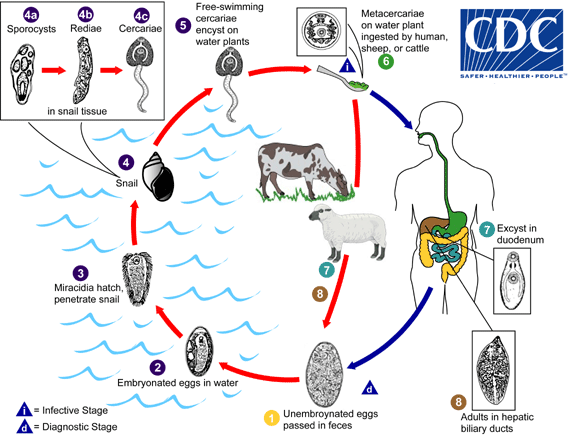
Adult liver flukes of the genus Fasciola have a characteristic leaf shape with an anterior oral sucker and a ventral sucker, and are found in the liver of ruminants and humans. The miracidium stage of the parasite looks nothing like the adult, because it is free living, covered with cilia and is "infectious" to snails. The cercaria even has a tail! But looks nothing like the adult or the miracidium. However, there is no denying that they are all the same species (Thomas, A.P., 1883). Suppose you sample water from a lake and find a miracidium, and suppose your atlas has no picture of a Fasciola miracidium, is it appropriate for you to name this parasite after yourself (which you can't technically do under the ICZN rules), and tweet #ifoundanewparasite?

Suppose alternatively that you have actually identified the miracidium as belonging to a trematode. How sure can you be that it is a miracidium of Fasciola and not the miracidium of Clonorchis or Dicrocoelium or Paragonimus? Are dichotomous keys based on overlapping length ranges enough for the identification?

The answer is no. You cannot definitively identify a miracidium without resorting to molecular techniques. 

Life cycle of Fasciola
The lifecycle of Fasciola, which also shows the morphology of life cycle parasites. Source: CDC
For more pretty pictures of the lifecycle, see a recent article in the Korean Journal of Parasitology @ http://parasitol.kr/journal/view.php?number=1870 


 And then there is the case of sexual dimorphism. For example, female oxyurids are larger than male oxyurids (Morand, 1998). If you were to find only a juvenile male as a result of your collection efforts, would it be right to compare its length to that of a female adult and declare the discovery of a new species or even a genotype, not realizing that your specimen is in fact a male?
And the alternate scenario, in which you identify it as a male, but have no explanation for why it is shorter than adult males are supposed to be.

The existence of species that look alike, even if their behavior is different poses another challenge to morphological identification. In the case of pathogenic parasites like Trypanosoma, if a veterinarian relies solely on morphology to distinguish between pathogenic T.brucei brucei (which causes nagana in cattle), and non pathogenic T.theileri, he is doomed, and so is the animal that he is attempting to treat, as is its owner. You may argue that the vectors for the two parasites are different. Yes. That is true. But the last time I checked, Trypanosomes on bovine clinical blood smears don't wear name badges that say which intermediate host they like to use.

The most logical thing is for us to ask ourselves, and each other these questions: 
  • How much should we rely on morphology to identify a rare parasite?
  • If a parasite has been described only once before, in a foreign language, should the claim be made that your new specimen is a new species, because of slightly different morphometrics? 
  • Is it correct to claim that you have identified a species using morphology, if you cannot produce photographs and reasons for the identification?
  • Is it okay to use a non-comprehensive atlas published in 1980 for the purpose of field identification?
  • Is it proper to not use microscopes in the field, because they are too heavy to lug around? 
  •  And since you are deep freezing your samples instantly after collection, it is perfectly acceptable to identify the parasites using morphology, a month after your return from field work. Right?
The correct response to the above questions is obviously "Not entirely" (for the first question) and "No" (for the other five). I hope those were your responses as well.  Supporting claims are mandatory when you are trying to identify rare parasites. It is perfectly alright to use morphology for identifying common parasites in clinical situations, solely on the basis of shape and features. Nobody would dispute the id of a large, pink-white, three lipped worm from the intestines of a pig as Ascaris, but doubts would arise if you found the same sort of worm in a fish and called that Ascaris

So, how now shall we id? The next time you tell someone that you like to identify rare parasites of an equally rare wild host species <insert your favorite host species here>, using morphometerics, it behooves you to back up your claims with supporting molecular data.
It is incumbent upon you to understand your data before you share it.

 
As always, opinions expressed are my own, you may choose to share them or choose not to.
 
References : 

Morand S., Hugot J.(1998) Sexual size dimorphism in parasitic oxyurid nematodes, Biological Journal of the Linnean Society 64,3,397-410
Thomas, A.P. (1883) The life history of the liver-fluke (Fasciola hepatica).QuarterlyJournal of Microscopical Science 23, 99–133


So, you made it to the end of the post! Great! As a reward, here is the picture of the type - specimen that is found in the alien's book.

From the best seller "Atlas of sentient life forms", from the publishing house Messier83, year Magellanic 0.197M, a collaborative effort of the Redshift consortium, page Q1W2E3 

Veterinarius parasitologistius - adult. Identification: Anterior part of body (known as "head" in the parlance of the organism) covered with numerous strands of black keratin, attached to which is a thin blue sparkling band. Two thin fore limbs seen, along with two hindlimbs which are capped in white, using which the organism is attached to the surface of the planet and which it uses for motility. The organism has a white outer layer, under which is found a blue layer. We are yet to ascertain which of these layers is the actual cuticle. The organism is uncommon, and is only found on the third planet orbiting the star Sol, in the Orion Arm of the spiral galaxy Milky Way.

PS: The picture is a representative of my lab attire.

Sunday, June 14, 2015

"Apicomplexans are lovely, dark and deep, but I have promises to keep, and miles to go before I sleep"

Dear Reader,
There has been a broadening of my research focus. 'Apicomplexity' has been a great blog to maintain, because that group of parasites is utterly fascinating. But, on the inside, I am a veterinarian through and through. Restricting myself to one group of parasites was not hard when I was working with a member of that group of parasites, that is, when I was working with Cryptosporidium, it was easy to restrict my blog to the Apicomplexans. But, a lot has happened since I first started this blog. I got a degree, moved places to start a PhD and have since begun working with other groups of parasites. And I definitely want to read, assimilate and write about the non-Apicomplexan parasitic beauties out there.

The point of this post is to inform you that you will be seeing more in this blog besides the Apicomplexans, including , but not restricted to ticks, and worms.

A new blog post is on its way !


Sunday, March 29, 2015

"The only good host is a live one", says Toxoplasma gondii

Immune evasion is the strategy that smart pathogens use to escape from the immune system and maximize their persistence and transmission. As has been alluded to, Toxoplasma is a perfect, intelligent parasite. It dampens the immune response, but allows just enough of an immune response to keep the host alive.


http://upload.wikimedia.org/wikipedia/commons/9/97/Toxoplasma_gondii.jpg
Credit: Image by Ke Hu and John Murray. Image is licensed under the Creative Commons Attribution 2.5 Generic license

The life cycle, briefly, of Toxoplasma gondii is as follows (in case you missed the myriads of posts that talk about Toxoplasma). Infective cysts when ingested, rupture in the new host, releasing the parasite. These invade the host cells and become the quickly replicating tachyzoite stage that cause the acute phase of the infection. This attracts the immune system, so that much of the infection is cleared. Some of the tachyzoites, however, persist, hitch rides to immunologically safe locations and become the slow replicating bradyzoites. These then form the bradycysts in important tissues like the CNS, the retina, the heart, causing a persistent chronic infection. When there is immunosuppression, the bradyzoites revert back and wreck havoc.

In an older article in Nature Reviews, the mechanisms of immune evasion and the recruitment of host anti-inflammatory pathways by the parasite are reviewed.

The author approaches the parasite from an evolutionary angle. Although the approach seems to give too much credit to a single celled protozoa, the anthropomorphic notion works well for the crafty Toxoplasma, the sole goal of which is to transmit itself to new hosts. Hence, it must do all that it can to multiply in its hosts, without killing them. To promote host survival, a powerful immune response is induced, which ensures that the host is not killed no matter what. But, Toxoplasma being clever, subverts the immune response. Thus, the very mechanism which ensures host survival is used to increase parasite persistence and transmission.

 The immune responses to Toxoplasma are summarized breifly below.

In the initial acute phase of the infection, NK cells are important for the initial immune response. IL12, which is secreted by the macrophages, neutrophils and DCs,  triggers the NK cells, and also triggers the interferon gamma dependent responses. DCs secrete IL12 when they harbor replicating Toxoplasma, or if they detect parasite derived molecules, even when other costimulatory signals are absent. Parasite derived molecules include cyclophilin 18 (a prolysylisomerase), which binds to the chemokine recptor CCR5 on DCs and trigger IL12 production. Incidentally, CCR5 also happens to be a coreceptor for HIV invasion, suggesting the hypothesis that C18 could inhibit monocyte infection by certain HIV strains.

TLRs take up some responsibility for IL12 induction. Evidence for this is provided by the fact that in MyD88 deficient mice, there is a marked reduction in the amount of IL12 secreted upon infection.TLR2 seems to  play a role in the overall immunity against Toxoplasma, with TLR2 deficient mice showing inefficient nitric oxide production by macrophages.MAP kinase p38 is involved in IL12 signalling. A Interferon inducible transcription factor (IRF8) promotes IL12 gene transcription. Absence of IRF8 also causes an absence of the DC subset CD8alpha +, which is  mainly involved in IL12 secretion.

So, why this intense fascination with IL12? What  exactly does IL12 do ?
IL12 activates NK cell and causes them to produce INF gamma, which in turn causes the proliferation of Type I CD4+ and CD8+ T cells, both of which also produce IFN gamma.

Macrophages infected with T. gondii produce nitric oxide in response to IFN gamma. Again, this does not completely eliminate the parasite, as some still escape exposure to NO.

Two strategies for immune evasion are mentioned, followed by an elaborate discussion of the second. The first is that the parasite becomes less susceptible to microbicidal activity by producing immunosuppressive molecules such as peroxiredoxins, that act against the effector molecules of the host. The second is that T. gondii uses mechanisms that exploit host anti-inflamatory responses.

Every effector mechanism in the body has a counteracting mechanism that keeps the former in check, ensuring homeostasis. This is true of the inflammatory response as well. A check to the wildly raging IFN gamma-dependent response is offered by IL10, which normally keeps in check the stimulated leukocytes in the acute phase of the infection. Now, IL10 is an antiinflammatory molecule that inactivates the microbicidal pathways triggered by IFN gamma, inhibits antigen processing and presentation by APCs, and inhibits cytotoxic cytokines producd by the T cells.

There is an upregulation of IL10 production that occurs concurrent to a T. gondii infection. If IL10 is neutralized in chronic Toxoplasmosis, severe CNS pathology results. Also, mice that produce little or no IL10 have uncontrolled INF gamma and TNF production in response to T. gondii, that results in severe leukocyte infiltration and hence severe inflammation. These mice also die in the acute phase of the infection. However, experts in the field disagree about the actual role played by IL10.

The second mechanism that is utilized is that of the potent antiinflammatory molecule lipoxin A4. LXA4 is generated by the action of 5-lipooxygenase on arachidonic acid via the intermediate leukotriene A4, which is acted upon by 15-lipoxygenase. Macrophages, but not DCs, participate in the production of lipoxins, even though the DCs are the main targets of LXA4. This mechanism operates independently of IL10. When mice that were IL10-deficient and those that were 5-lipoxygenase deficient, were challenged with T. gondii, severe infiltration with lymphocytes and severe necrosis of the liver without any CNS pathology was observed in the former, while there was infiltration of both the CNS and the liver in the latter. In mice that lacked 5-lipooxgenase, administration of IL 10 caused parasite reactivation and proliferation, because macrophage activity was inhibited.

The cellular source of 15-lipoxygenase, the enzyme that acts on leukotriene A4 to convert it to LX4, has been a mystery, suggesting that perhaps Toxoplasma itself produces the molecule. Proteomic analysis has showed that Toxoplasma tachyzoites carry a lipoxgenase that is similar to a plant derived type I lipoxygenase. Whether this is 15 lipoxygenase is yet to be confirmed. Also, the genes that code for the enzyme are yet to be identified in Toxoplasma. It is speculated that host cell invasion or immune attack of infected cells might trigger an upregulation of the lipoxygenase in intracellular forms.

5-lipoxygenase, the enzyme that converts arachidonic acid to leukotriene A4, is present in the host cells, and can be stimulated by parasite extracts. Since lipoxins dampen the immune response, host survival is ensured.

Two other examples of lipoxygenase modulation, that the author mentions, are: a pathogen coded lipoxygenases (a 15-lipoxygenase-like molecule) in Pseudomonas aeruginosa and a putative one in Mycobacterium tuberculosis.

In P. aeruginosa infections in cystic fibrosis patients, the authors speculate that the bacteria might use the lipooxygenase to produce lipoxins that might suppress inflammation, and so persist by not activating the immune system in immunocompetent patients. The actual relevance of this in clinical situations is yet to be elucidated because CF patients do not produce lipoxins in the lungs. The authors further speculate that mutations in the CFTR and other genes might also affect lipooxgenase generation directly in CF patients.

Mice that did not produce LXA4 endogenously seemed more resistant to infection with Mycobacterium tuberculosis.  They survived longer, had lower bacterial counts and a more pronounced type I CMI to the bacteria.

The author suggests that a contradiction emerges. Lipoxins seem to be protective in Toxoplama infections and yet detrimental in M. tuberculosis infections, suggesting that biological reasons are responsible. For Toxoplasma gondii, host survival is necessary to enable predation of the host. So, lipoxins dampen a fierce immune response, disallowing complete elimination of the parasite. In tuberculosis however, high bacterial numbers need to be generated to ensure transmission . Here, lipoxins dampen the immune response to allow proliferation.  The author concludes that lipoxin mediated immunomodulation is a new field with many unanswered questions and potential therapeutic applications.

Reference :
Aliberti, J., 2005. Host persistence: exploitation of anti-inflammatory pathways by Toxoplasma gondii. Nat Rev Immunol 5, 162-170.


Saturday, October 25, 2014

This is not the ending !

Sorry that this blog has not been updated in the last two months. I am currently busy, working on my thesis and I have been swamped. I promise that I will have some insightful blog posts when I am done with my final examination.

In the mean time, here are some words from one of my favorite bands, quite out of context for this blog:

"So if you are scared 'cause you think that you are missing out
  This is not the ending
  No, this is not the ending "
                                   - Tenth Avenue North

Monday, August 18, 2014

When we left for the brain in a DC shuttle - Toxoplasma gondii

If you know me well, you would know my near-fanatical obsession with the awe-inspiringly beautiful Aurora Borealis. They are especially delightful on cold wintry nights on the icy, wind-swept prairie. And out in the darkness, when one sits, waiting for the beautiful ribbons of light to appear, one may observe the bright, distant balls of gas that are scattered across the sky in a milky band, and sometimes the man-made satellites that look like fast moving stars, seemingly weave in and out of the constellations in the background. If you asked me, I would tell you that astrophysics, sans the formulae, is certainly a field meant for hobby reading. Recently, I enjoyed a documentary series, produced by Discovery Communications, titled "When we left Earth : The NASA Missions", which featured the Mercury, Gemini, Apollo Missions, and NASA's golden age, the Space Shuttle era. The progress in the technology and the ability of humans to go beyond the physical boundaries imposed by the planet and its forces are quite remarkable, and quite interesting to follow, all the more if you were old enough to remember the landing on the moon, [which I am not, but that is not a major deterrent].

Just as the space shuttles were designed to carry payloads and people to the low Earth orbit, the zoonotic apicomplexan, Toxoplasma gondii , uses the dendritic cells of the host to move around uninhabitable spaces and cross barriers that it normally cannot by itself cross. Most comparisons call for the dendritic cells to play the role of a Trojan horse, but the space shuttle analogy works just as well.

Here is a brief overview of the life cycle before we scrutinize Toxoplasma's insane abilities to flag down, hitch rides and hijack shuttles. When the infective bradyzoites (in the cyst) are ingested by the definitive host (domestic cat and other Felids), the sexual cycle ensues in the intestines and oocysts are shed in the feces; quite similar to other Coccidians. However, the asexual cycle in the intermediate hosts is what sets Toxoplasma apart. In humans, sheep, mice and every other imaginable host, infective oocysts differentiate into tachyzoites which invade the intestines, multiply and later migrate in the body to form cysts containing bradyzoites. Favorite spots for cyst formation include the brain, the placenta (resulting in abortion(s)) and the eyes; every one of these organs are "immuno-previleged", that is, they are places where innate immuno-surveillance is lower than in the other organs of the body. Before cysts can be formed, Toxoplasma gondii  has to get to these places.The migration of a stage called the tachyzoite is the theme of this post.


Getting to know your shuttle
The Dendritic cells are an enigmatic group of leukocytes, first discovered by Steinman R. in 1973, (Steinman was awarded the 2011 Nobel Prize in Physiology/Medicine, only three days after his death. You know of course, that the Prize is usually not awarded posthumously and this was a rare exception made in good faith by the Nobel Prize Committee, whose members were entirely unaware of the death of the laurate) , that have an absolutely incredible range of activities to perform. These bone marrow derived cells, migrate to their temporary homes and keep themselves entertained by sampling their environment, taking up and processing antigens. They are the great controllers of the adaptive immune system, the gatekeepers, if you will, and live throughout the body, at all possible portals of pathogen entry (the skin, the intestines etc), and the secondary lymph organs. They play key roles in immunological tolerance. Once they encounter an antigen that is deemed dangerous, based on its molecular phenotypic profile, or in simple terms the pattern of its dress, they take it up, process it (read "beat it to a pulp") and later migrate with it to lymph nodes where they "present" the processed antigen (on silver platters called MHC molecules) to T cells that are fit to receive such presents (viz., antigen specific). All the while, the DCs secrete chemokines, through which other cells are activated and the immune response spirals into a cell mediated or humoral response as necessary.

DCs exist as distinct subtypes. The jury is out on whether these subtypes are specialized lineages or just functionally plastic cells. The cellular marker of a mature DC in mouse is the CD11c molecule. Interdigitating DCs carry CD205 as well. CD11b is another marker of interest. In mice spleen, CD4-CD8+, CD4+CD8- and CD4-CD8- DC populations exist. Thymic DCs in mice are predominantly CD4-CD8+CD205+CD11b-. Lymph node DCs are predominantly CD4-CD8-CD205-CD11b+ cells. Langerhans DCs dominate the skin draining LNs, and are CD4-CD8-CD205+CD11b+.

Toxoplasma gondii, the perfect parasite, makes use of the migratory activity of this mysterious cell type. In the intermediate host (the animals on the left side on the picture above; that is, mice, humans and other mammals), the parasite enters the body through the mouth when the infective oocyst stage is accidentally consumed. Oocysts that are shed by a household cat is usually the reason that humans come in contact with the parasite. Toxoplasma oocysts unmask themselves to show their virulent side, becoming fast replicating tachyzoites, by invading the intestinal cells and replicating. The DC in the vicinity leap into action. But, even as they lash out, Toxoplasma tachyzoites invade them and causes them to become hypermotile, even in the absence of chemotactic stimuli from other predilection sites. The precise mechanism by which it uses the DCs as its own personal mode of transportation is only slightly known. Within 2 - 3 hrs the parasite rides its shuttle to the local lymph node, each content to bring the other to the LN.

Leaping to action
The DC response at the first hint of the tachyzoites is the production of IL12, triggered through TLR 11 recognition of a profilin-like molecule of the parasite and CCR5 mediated recognition of cyclophilin 18. Other TLRs that are activated include TLR2 and TLR4, both of which are activated by Toxoplasma's glycosylphosphotidylinositol anchors. Once the TLRs are activated, the response is rapid. IL12 activates NK cells, which secrete the first doses of interferon gamma. By this time, the DCs have migrated to the lymph node and present the Profilin-like molecule on MHC Class II molecules. DCs continue to secrete IL12. Antigen specific CD4+ cells are activated by the cytokine mileu and the presented antigen. They begin to pour out IFN gamma in a perfect example of a positive feedback loop, driving their own differentiation down a Th1 road. And you probably know that Th1 responses are primarily cell mediated. Also, DCs are capable of direct antigen presentation on MHC Class I molecules to CD8+ cells, activating them. Actively dividing tachyzoites are now cleared by the CD4+ and CD8+ cells that have migrated to the infection sites in the intestines and the acute phase of the infection ends. The immune system seems to have done its job.

However, the tachyzoites that infected the DCs that have now reached the local lymph node are alive and well. Once a DC reaches the lymph node, it does not ordinarily leave very easily under normal circumstances. Toxoplasma infected DCs though exhibit a bizarrely hypermotile phenotype that allows them to be steered as Toxoplasma pleases. The CD 11c on the surface is down regulated and the CD 11b is upregulated. The infected cells turn from CD11c+CD11b+/- to CD11c-CD11b+.

According to a study by Lambert et al. (2009), hypermotility of the DCs also depends on the genotype of Toxoplasma, with Type II strains showing "stronger intracellular associations with CD11c+ DCs". Types II and III were better at causing DC movement than Type I, although the latter seemed to have better motility on its own, and was able to cross physiological barriers than the former two.

The destination
In an elegant review article, Galea et al. (2006) clarify the 'immune privileged' status experienced by the brain, which is where Toxoplasma controlled DCs are headed. They reiterate that "immune privilege is relative and not absolute", that is, whilst the brain in its normal condition does not host DCs and other antigen presenting cells, an inflammatory response is an altogether different story. One possible reason for this according to other neuroscientists including Coisne et al. 2006 is the "Differential expression of selectins" and other adhesins like ICAM-1 and VCAM-1.

Barragan et al. in 2005 have shown that when Toxoplasma transmigrates, that is,  moves across the blood brain barrier without disrupting it, the layers of intervening cells maintain their structure and integrity. And because this was studied in an electrical organ like the brain, they also measured the Transcellular electrical resistance, which they found to be maintained at a steady state during said parasite-DC migration. Using ICAM-1 antibodies, they discovered that ICAM-1 on the host cell surface was involved and that it interacted with a set of micronemal proteins on Toxoplasma called MIC2.

In a more recent study, Lachenmaier et al. (2011) pinned the exact mechanism of neuroinvasion by stating that CD11b+ cells were the main cell population that were used. They further claimed that both type I and II strains were equally capable of infecting CD11b+/CD11c+ cells and migrating across the blood brain barrier. Transmigration also seemed to cause "a marked change in the transcriptome of the brain endothelial cells", which basically caused the upregulation of adhesins, integrins and selectins, including ICAM-1, E-selectin, P-selectin and TLR4. Other cytokines whose transcriptions were upregulated include IL6, MCP-1 and the cytokines CCL2, CCL7, CXCL1, CXCL2 and CX3CL1. Since the entry is essentially paracellular, and because the parasite must continue to evade the immune system, they found that certain molecules were downregulated. These included claudin 8, that belongs to the claudin group of proteins that are involved with sealing of the tight junctions. Downregulation of claudin 8 causes loosening of the junctions. Interferon gamma production was downregulated as well, by the downregulation of the transcription factor STAT4. The authors suggest that preliminary evidence exists to support the hypothesis that extracellular tachyzoites are not as capable of crossing the BBB as ones that are infecting leucocytes.

In conclusion, Toxoplasma gondii seems to be a parasite that is more than capable of controlling the host immune response in all the ways necessary to achieve its purposes of entering the brain. Once in the brain, the parasite forms cysts that contain a slowly replicating form (bradyzoites). This causes a latent form of the disease, that in humans occasionally manifests as Toxoplasmic encephalitis or TE. TE patients exhibit neurological symptoms that may include schizophrenia. The exact prognosis of infection depends on various controllable and non-controllable factors that are wonderfully reviewed by Carruthers and Suzuki, 2007. Although it is predominantly an animal parasite, the zoonotic nature of Toxoplasma surely compels our attention.

References in no particular order :
Sanecka A, Frickel EM. Use and abuse of dendritic cells by Toxoplasma gondii. Virulence. 2012 Nov 15;3(7):678-89.Review.

Feustel SM, Meissner M, Liesenfeld O. Toxoplasma gondii and the blood-brain barrier. Virulence. 2012 Mar-Apr;3(2):182-92.

Lachenmaier SM, Deli MA, Meissner M, Liesenfeld O. Intracellular transport of Toxoplasma gondii through the blood-brain barrier. J Neuroimmunol. 2011 Mar;232(1-2):119-30.

Carruthers VB, Suzuki Y. Effects of Toxoplasma gondii infection on the brain. Schizophr Bull. 2007 May;33(3):745-51. Epub 2007 Feb 23. Review.

Galea I, Bechmann I, Perry VH. What is immune privilege (not)? Trends Immunol. 2007 Jan;28(1):12-8.

Denkers EY, Butcher BA, Del Rio L, Bennouna S. Neutrophils, dendritic cells and Toxoplasma. Int J Parasitol. 2004 Mar 9;34(3):411-21. Review.

Barragan A, Brossier F, Sibley LD. Transepithelial migration of Toxoplasma gondii involves an interaction of intercellular adhesion molecule 1 (ICAM-1) with the parasite adhesin MIC2. Cell Microbiol. 2005 Apr;7(4):561-8.

Coisne C, Faveeuw C, Delplace Y, Dehouck L, Miller F, Cecchelli R, Dehouck B. Differential expression of selectins by mouse brain capillary endothelial cells in vitro in response to distinct inflammatory stimuli. Neurosci Lett. 2006 Jan 16;392(3):216-20. Epub 2005 Oct 7.

Lambert H, Vutova PP, Adams WC, Loré K, Barragan A. The Toxoplasma gondii-shuttling function of dendritic cells is linked to the parasite genotype. Infect Immun. 2009 Apr;77(4):1679-88.


"Toxoplasmosis life cycle en" by LadyofHats. Licensed under Public domain via Wikimedia Commons - http://commons.wikimedia.org/wiki/File:Toxoplasmosis_life_cycle_en.svg#mediaviewer/File:Toxoplasmosis_life_cycle_en.svg

Wednesday, June 11, 2014

O live, and make us weep to hear your fate, fair Cryptosporidium, who art smitten by a virus

Act I : Exposition
Imagine a virus that can infect Protists! Although it is common knowledge that viruses are as ubiquitous as other microorganisms, and that each living species probably has a set of viruses that they specifically play host to, protozoan viruses are not exactly virology textbook material. Without exception though, these strange entities can still be classified under the Baltimore system of classification. Trichomonas, Babesia, Giardia, Eimeria, Leishmania and Cryptosporidium, among others, host some of the recently discovered ones. For this blog, I am going to focus on the virus that infects the protozoan Cryptosporidium, for no reason other than that it affects my favorite Apicomplexan.

In 1995, Gallimore and his colleagues, published the first report of a picobirnavirus with an "atypical genome" that they had found in human fecal samples that were positive for Cryptosporidium parvum oocysts. They had detected two fragments of 1.75 and 1.55 Kbp size with Polyacrylamide Gel Electrophoresis. They found the genome "atypical" because it was considered far too small in comparison with previously described "typical" picobirnaviruses.

If you know how naming in virology works, you probably have deduced that the virus under scrutiny is small and has two segments in its RNA genome.

(Image from EMDB - 1459)

Act II: Rising action
The initial description was followed by others. A publication by Khramtsov et al. in 1997, shows how researchers attempted to characterize the virus. They found that the "novel" extrachromosomal dsRNA that they had isolated from the oocysts of Cryptosporidium parvum was found only in that species (viz. C. parvum), but was absent in other "non-parvum" species that they tested. I found the "non-parvum" species very interesting indeed! C. serpentis of snakes, C. andersoni of cattle, C. baileyi of birds, C. muris of mice and an ostrich isolate were the ones they had tested. Since the ostrich fecal isolate used cannot be identified with any degree of certainty, I offer no comments on it. Other than the odd-ball C. baileyi however, the other three species belong to the gastric group of Cryptosporidium, whereas C.parvum belongs to the intestinal group. So, it would be fairly interesting to see if both groups harbour the virus and if the other intestinal species actually lack it entirely.

Act III: Climax
Khramtsov et al., also found that the larger of the two segments after cloning proved to be a single open reading frame that encoded a protein that was homologous to a virally coded RNA dependent RNA polymerase and that the smaller one was homologous to a MAP kinase. The RNAs were also susceptible to degradation by RNAse A, possibly because they were unencapsidated.

In 2000, Khramtsov et al., isolated the ds RNA from both the calf and human isolates of Cryptosporidium parvum sensu lato, which were then known as C.parvum genotype II and C.parvum genotype I respectively. We know now that the human isolates were in fact C. hominis. Thus, our question must be modified. Can intestinal species other than the ones we now know as C.hominis and C.parvum be infected by the virus?
Subsequent research has found double stranded RNA molecules with 86% similarity in nucleic acid extracts from C.felis and C.meleagridis, both of which most definitely belong to the intestinal group.

Act IV: Falling action
In 2004, Kniel et al., had the absolutely brilliant idea of utilizing the Cryptosporidium parvum virus (CPV; not to be confused with Canine Parvovirus or Cowpox virus) antigen as a target for the detection of C. parvum oocysts. SDS-PAGE analysis of the CPV antigen showed that it was a 40kDa protein. However, for reasons unexplored, the anti- recombinant CPV antibodies raised in rabbits cross-reacted with another 30 kDa protein as well. Immunofluorescence indicated that the antigen localized at the apical end of the parasite and once again no one knows why. The claim of the principle to remarkable sensitivity is well supported by the fact that one single oocyst suspended in water could be identified using an immunoblot assay. However, the long-lasting CPV antigen, which is not degraded even after 3 months, cannot be used to differentiate infectious oocysts from non-infectious ones, which severely dampened the enthusiasm of diagnosticians.

Further research along the same lines was carried out in 2008 by Jenkins et al. The near flawless principle quickly deteriorated because of the sheer complexity of protein folding. The researchers made monoclonal Abs against the 40 kDa protein, because they thought a hybridoma would provide "an unlimited source of detection reagent" and increase assay sensitivity. But, despite using an indirect IFA, the sensitivity was not much higher than the conventional IFA that targets the outer wall protein. Nevertheless, on a dot blot assay, the sensitivity was seemingly incredible. As low as 100 non-bleach treated oocysts could be detected. The authors however agree that this jaw dropping oddity was probably due to contamination and the binding of MAbs by Fc receptors on contaminant bacteria, because bleach treated oocysts (which are standards for research), could not be detected well. Another wall that the researchers ran up against was the native confirmation of CPV40, which did not allow the binding of the antibody made against the recombinant antigen. It is possible that the recombinant protein made in E.coli did not fold the same way due to lack of eukaryotic chaperone proteins. To circumvent the binding issue, the proteins had to be extracted under denaturing conditions. Under non-denaturing conditions, yet another eccentricity was observed. The MAb could bind to proteins of size 77 and 125 kDa respectively, which were presumed to be viral capsid dimers and tetramers. This presumption begs to be challenged. If the epitope is not exposed in the monomeric capsid, then it surely must not be exposed in the dimeric or higher forms given the regularity and symmetry of the virus. In the end, the detection system is still not fully ready for use.

Act V: Denoument
That same year , the executive committee of International Committee on the Taxonomy of Viruses agreed to formally recognize the virus, which became known as 'Cryptosporidium parvum virus 1' (CSpV1), and establish a new genus called Cryspovirus in the family Partitiviridae, in which it is currently ensconced.

A short paper by Jenkins et al., published in 2008 (Was 2008 the year of the Cryspovirus?) sought to give the virus a role. "Fecundity" , that is , oocyst producing ability of two strains of C. parvum were compared, one of which had the virus and one of which did not. Calves infected with C. parvum with virus had a 5 fold higher oocyst output in their feces compared to the calves infected with C.parvum without the virus. Calf immunity and other variables cast doubts on the report. Does the virus affect the replication of the parasite (given that it is only cytoplasmic) or is the proposal just a fanciful conjecture?

A description paper was later published, cementing the name and the taxonomy. CSpV1 shows vertical transmission only. The virions are isometric, have a diameter of 31nm with short protrusions on their surface.

The story of the Cryspovirus continues to unfold. We are yet to come to a full understanding of its significance in the life history of Cryptosproridium and hence its importance to us. I'm looking forward to future publications!

References :
Gallimore CI, Green J, Casemore DP, Brown DW. Detection of a picobirnavirus associated with Cryptosporidium positive stools from humans. Arch Virol. 1995;140(7):1275-8.

Khramtsov NV, Woods KM, Nesterenko MV, Dykstra CC, Upton SJ. Virus-like, double-stranded RNAs in the parasitic protozoan Cryptosporidium parvum. Mol Microbiol. 1997 Oct;26(2):289-300.

Khramtsov NV, Chung PA, Dykstra CC, Griffiths JK, Morgan UM, Arrowood MJ, Upton SJ. Presence of double-stranded RNAs in human and calf isolates of Cryptosporidium parvum. J Parasitol. 2000 Apr;86(2):275-82.

Leoni F, Gallimore CI, Green J, McLauchlin J. Characterisation of small double stranded RNA molecule in Cryptosporidium hominis, Cryptosporidium felis and Cryptosporidium meleagridis. Parasitol Int. 2006 Dec;55(4):299-306.

Kniel KE, Higgins JA, Trout JM, Fayer R, Jenkins MC. Characterization and potential use of a Cryptosporidium parvum virus (CPV) antigen for detecting C. parvum oocysts. J Microbiol Methods. 2004 Aug;58(2):189-95.

Jenkins MC, O'Brien CN, Trout JM. Detection of Cryptosporidium parvum oocysts by dot-blotting using monoclonal antibodies to Cryptosporidium parvum virus 40-kDa capsid protein. J Parasitol. 2008 Feb;94(1):94-8.

Nibert ML, Woods KM, Upton SJ, Ghabrial SA. Cryspovirus: a new genus of protozoan viruses in the family Partitiviridae. Arch Virol. 2009;154(12):1959-65.

Jenkins MC, Higgins J, Abrahante JE, Kniel KE, O'Brien C, Trout J, Lancto CA, Abrahamsen MS, Fayer R. Fecundity of Cryptosporidium parvum is correlated with intracellular levels of the viral symbiont CPV. Int J Parasitol. 2008 Jul;38(8-9):1051-5.